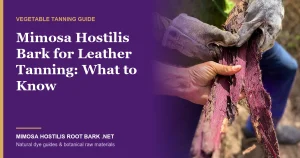
Mimosa Hostilis Bark for Leather Tanning: What You Should Know
Discover how Mimosa hostilis root bark relates to vegetable leather tanning, the role tannins play, and the precautions to consider.

Discover how Mimosa hostilis root bark relates to vegetable leather tanning, the role tannins play, and the precautions to consider.
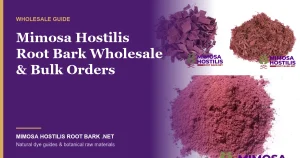
Buy Mimosa hostilis root bark wholesale in whole, shredded, or powdered form. Explore pricing, bulk orders starting at 5 kg, and shipping options from Las Vegas.
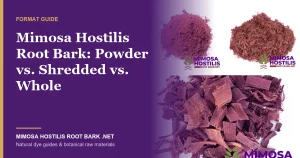
Compare Mimosa hostilis root bark formats for dyeing and soap making. See the differences in texture, extraction speed, price range and storage.
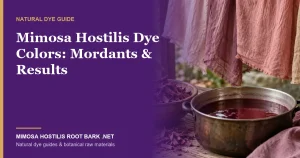
Discover how alum, iron and pH change Mimosa hostilis dye colors on wool, silk and cotton, with swatch-testing tips for repeatable shades.
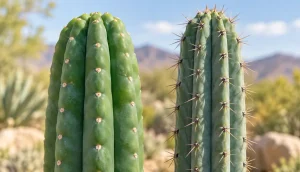
The columnar cacti of the genus Trichocereus (often classified under Echinopsis) are among the most famous and striking specimens in
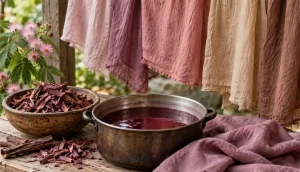
Natural dyeing is a beautiful craft that connects us to ancestral traditions and the natural world. Among organic dye sources,
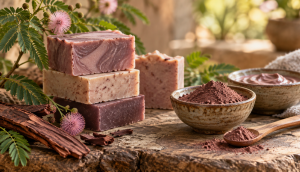
Mimosa Hostilis, locally known as Jurema Preta in Brazil and Tepezcohuite in Mexico, is a plant famous for its incredible

Wild Dagga, known as Leonotis leonurus, has been used in traditional African medicine for centuries. This plant, native to South

The San Pedro cactus, scientifically known as Echinopsis pachanoi, is a plant native to the Andes mountains in South America.
