
How to Dye Fabric with Mimosa Hostilis Root Bark
Natural dyeing is a beautiful craft that connects us to ancestral traditions and the natural world. Among organic dye sources, the inner root bark of Mimosa Hostilis (Jurema Preta) stands out as one of the most reliable and color-rich dyestuffs. High in natural tannins, Mimosa Hostilis root bark requires no complex chemical additives to bind to fibers, making it an excellent choice for beginner and expert textile artists looking to dye cotton, linen, wool, or silk.
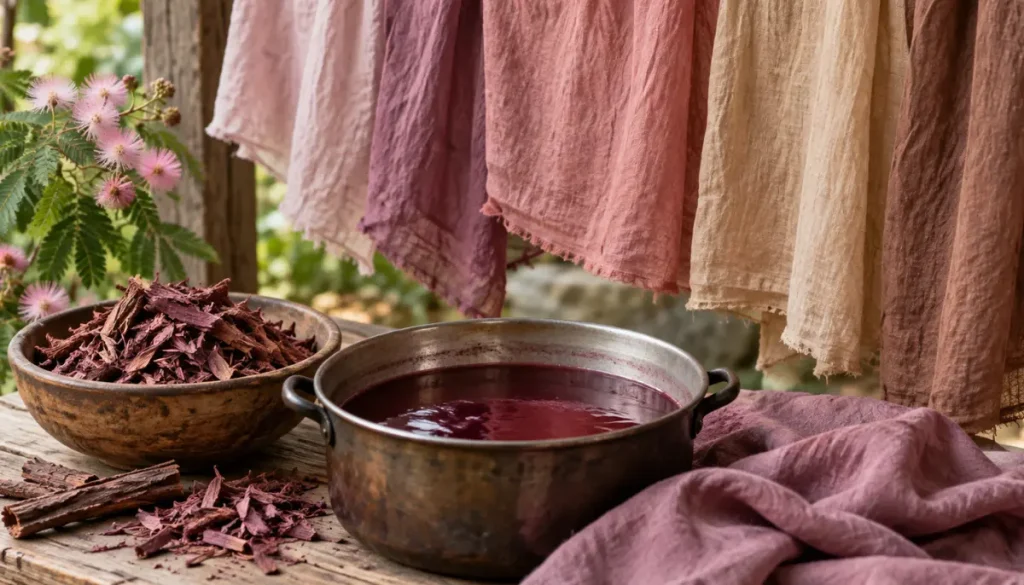
What Colors Can You Achieve?
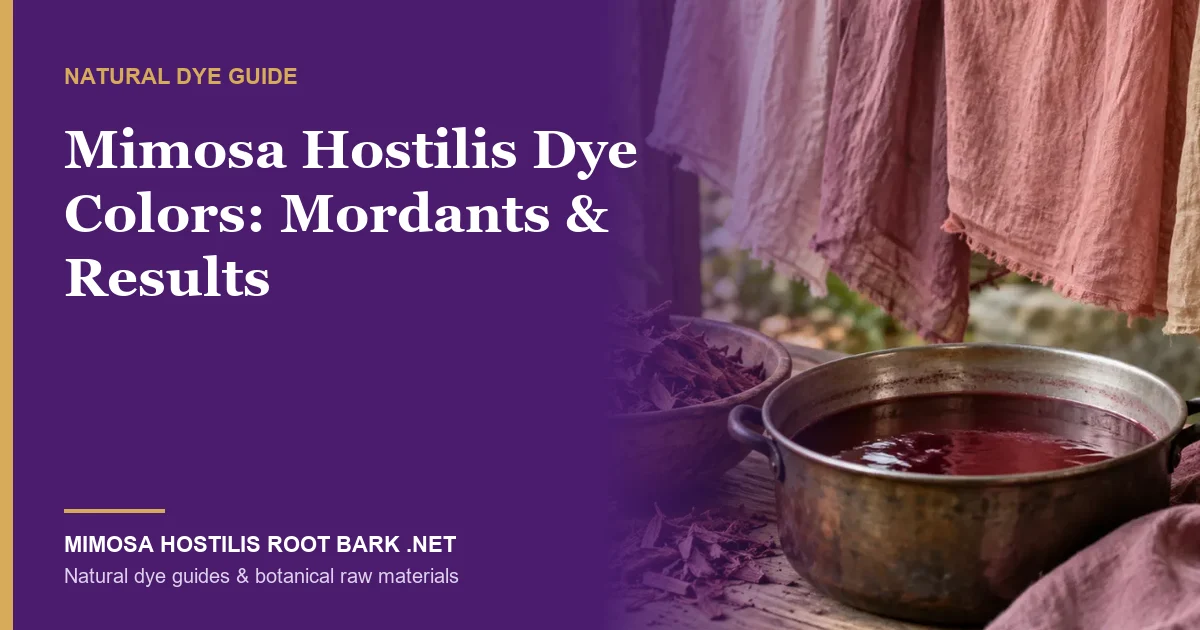
Mimosa Hostilis is incredibly versatile. Depending on the fiber type, water pH, temperature, and modifiers used, it yields a stunning spectrum of shades:
- Warm Mauve and Soft Lilac
- Rich Dusty Pink and Rose Gold
- Chocolate Browns and Tan
- Charcoal Gray and Slate (when modified with iron)
Materials Checklist
Before starting, gather the following tools and materials:
- Dye Stuff: 50g – 100g of MHRB Powder or Shredded MHRB.
- Fabric/Yarn: Natural fibers only (wool, silk, cotton, or linen). Synthetic fibers like polyester will not absorb the dye.
- Mordant: Alum (Potassium Aluminum Sulfate) to fix the dye and enhance color fastness.
- Equipment: A stainless steel dye pot (do not use for food preparation after dyeing), a scale, a wooden spoon, and a strainer.
Step-by-Step Dyeing Guide
Step 1: Prep the Fiber (Scouring and Mordanting)
First, wash your fabric in hot water with neutral soap to remove dirt and oils (scouring). Next, mordant the fabric. For animal fibers (wool/silk), dissolve Alum (15% weight of fabric) in warm water, add the fabric, bring to a gentle simmer for 45 minutes, then let it cool. For plant fibers (cotton/linen), a combined alum and tannin bath works best.
Step 2: Extract the Dye
Place your Mimosa Hostilis bark in the pot and fill with enough water to cover it. Bring to a gentle boil, then lower the heat to a simmer. Let it simmer for 1 to 2 hours. You will see the water turn a deep, dark red/purple color. Strain out the shredded bark (or let the powder settle) and keep the liquid dye bath.
Step 3: The Dye Bath
Add your damp, mordanted fabric into the warm dye bath. Ensure the fabric can move freely to avoid uneven splotches. Simmer gently (do not boil, especially for wool) for 45 to 60 minutes. Stir occasionally. Let the fabric cool down completely inside the dye pot; overnight cooling produces the deepest hues.
Step 4: Rinse and Dry
Remove the fabric from the bath. Rinse in cool, clean water until the water runs clear. Hang the fabric to dry in a shaded area away from direct sunlight (as natural dyes are sensitive to UV rays while drying).
Using Modifiers to Shift Colors
Since Mimosa Hostilis is rich in tannins, it reacts dramatically to iron. If you dissolve a small pinch of iron powder (Ferrous Sulfate) into the dye bath after 45 minutes and stir, the pinks and mauves will instantly shift to beautiful, dark steel gray or charcoal shades. This technique is called “saddening” the dye.
Start Dyeing Today
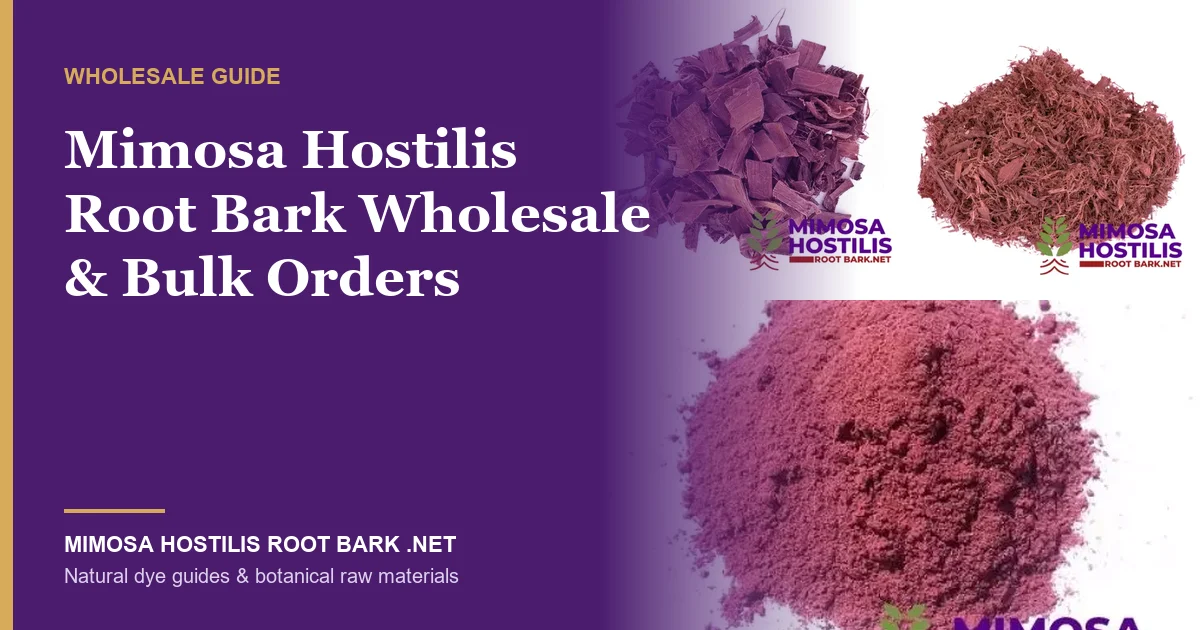
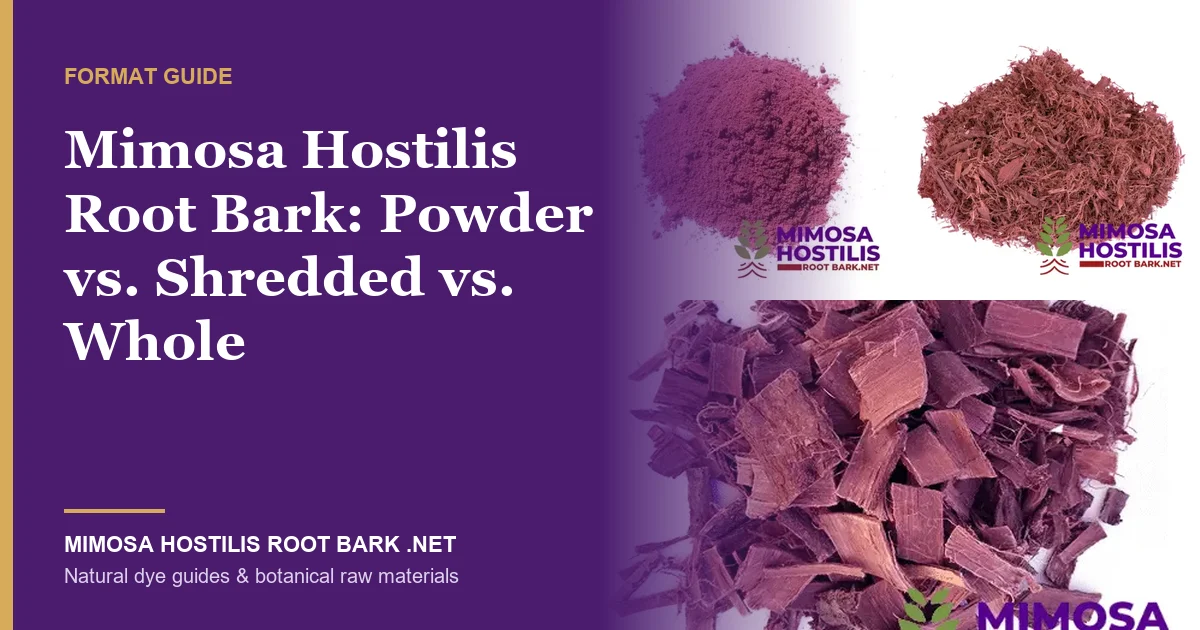
If you are ready to explore the art of natural dyeing, choose from our premium quality Powdered Mimosa Hostilis or Shredded Mimosa Hostilis Root Bark, sourced ethically and shipped fast and discretely from the USA.
Categories
Most Popular
Mimosa Hostilis Root Bark: Powder vs. Shredded vs. Whole
October 20, 2026
Mimosa Hostilis Dye Colors: Mordants and Results
October 15, 2026
Social Media
