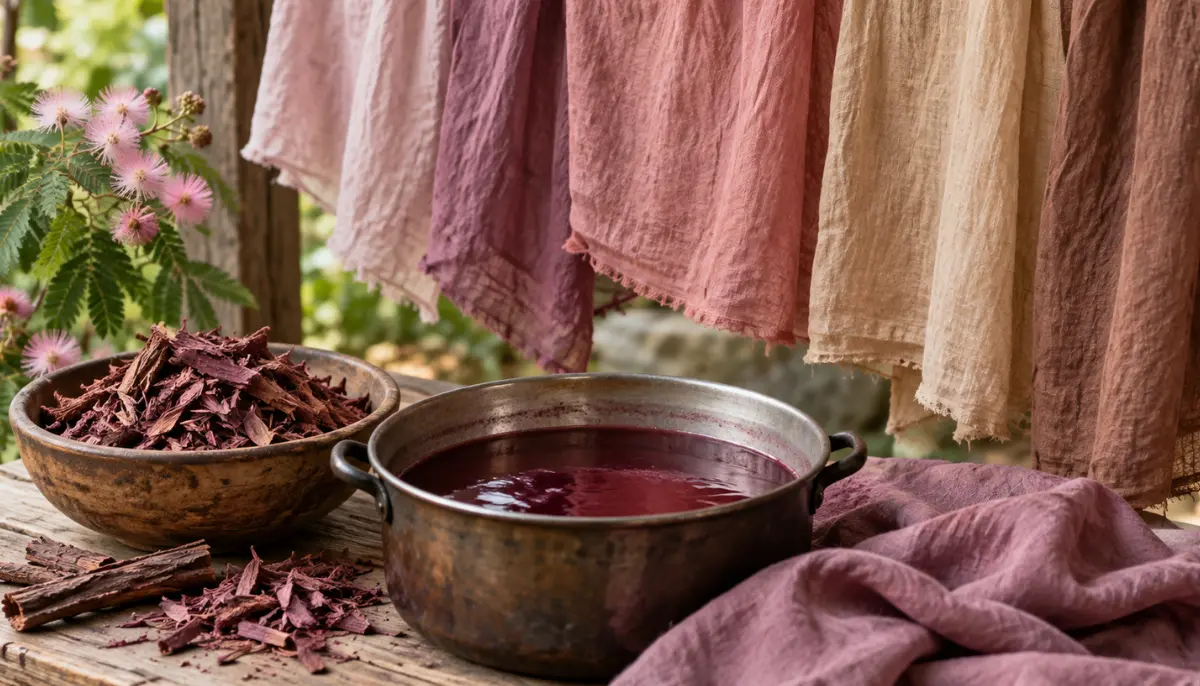
The color obtained when dyeing with Mimosa hostilis can vary considerably depending on the mordant used, the type of fiber, and the pH of the dye bath. Without a mordant, the bark typically produces warm, earthy tones, while alum can enhance pink, mauve, and purple hues. Iron, on the other hand, darkens the result and can shift it toward slate gray, deep brown, and charcoal.
That is why, if you are looking for a specific color from Mimosa hostilis, a mordant is not simply a step that helps fix the dye to the fabric: it can also significantly change the final shade.
What Colors Does Mimosa Hostilis Produce With Different Mordants?
In general, these are the results you can expect:
- Without a mordant: warm browns, reddish brown, earthy tones, and soft mauve hues.
- With alum: muted pinks, mauve, purple, and brighter plum tones.
- With iron: deep browns, dark purple, slate gray, and charcoal tones.
- With a slightly alkaline bath: the color may shift toward cooler tones and deeper purples.
- Depending on the fiber: wool and silk often display richer, deeper colors, while cotton may produce softer, more muted results.
In other words, there is no single “Mimosa hostilis color.” The final result is a combination of the plant material, fiber, mordant, pH, dye bath concentration, and dyeing time.
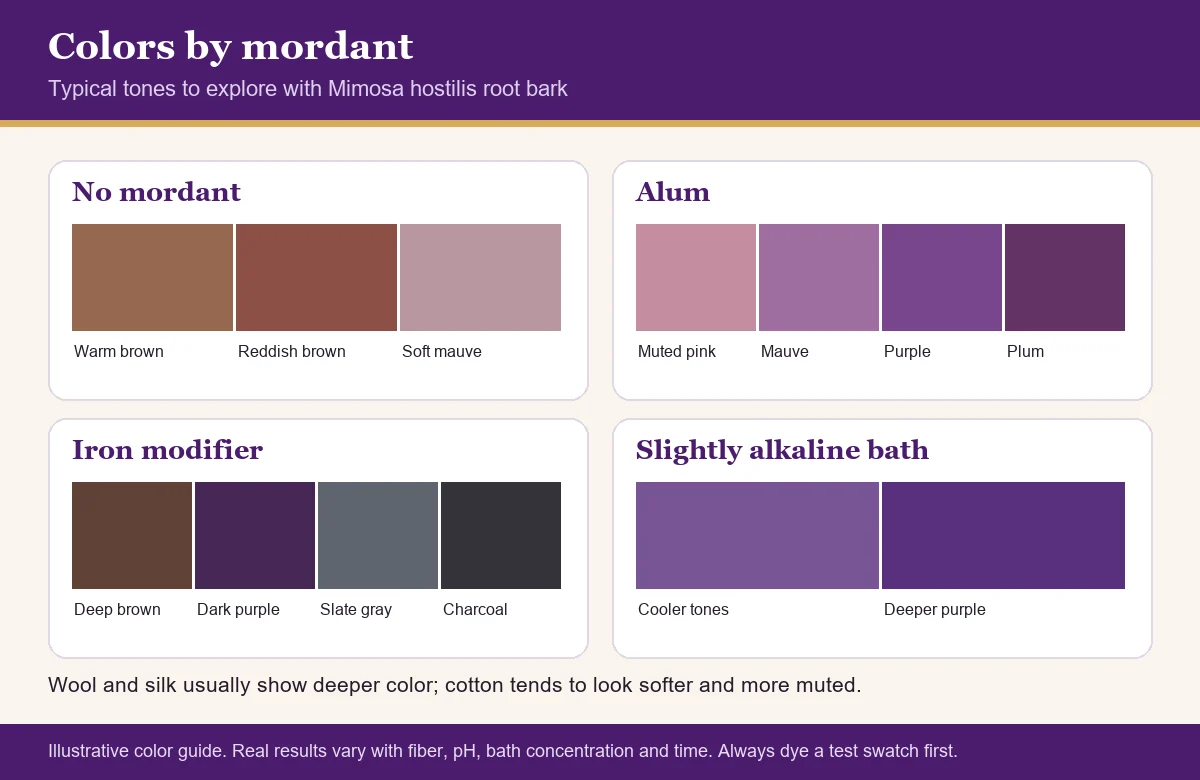
If you are looking for purple, mauve, or plum shades, alum is a good starting point. If you want to shift those tones toward darker, more muted colors, an iron modifier can move them toward gray, deep brown, or charcoal. If you prefer warmer, more natural shades, dyeing without a mordant can produce a range of soft browns and mauves.
What Does a Mordant Do?
A mordant is a substance that helps natural dyes bond with textile fibers and, depending on the mordant used, can change the color we ultimately see on the fabric. In natural dyeing, this makes it possible to obtain different shades from the same plant material.
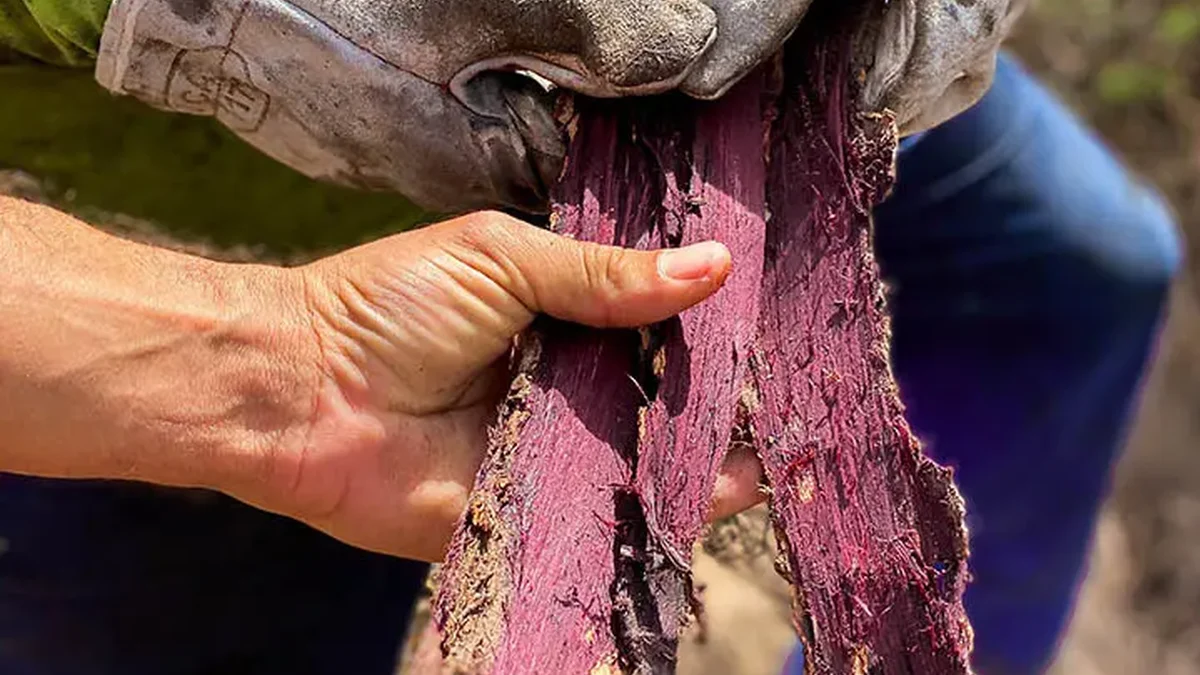
With Mimosa hostilis, the result can change considerably depending on the mordant used. Alum tends to encourage lighter, brighter shades, while iron acts as a color modifier and can darken the dye, shifting it toward grays, deep browns, and charcoal tones.
Mimosa hostilis bark contains tannins and other natural compounds that play a role in the dyeing process. These compounds interact with the fiber and with the different agents used during dyeing, which is why two samples dyed with the same plant material can produce different colors.
Mordant vs. Modifier
Although these terms are sometimes used interchangeably, it is helpful to distinguish between them:
- Alum: Traditionally used as a mordant to prepare certain fibers before dyeing, it can help produce brighter, more defined colors.
- Iron: Commonly used as a color modifier, it can darken and cool the shades produced by the dye.
- Tannins: Natural compounds found in many plants that can interact with textile fibers and certain mordants.
The result also depends on the type of fiber used. Wool, silk, and cotton do not respond in exactly the same way to the same dye bath. A recipe that produces a particular shade on wool will not necessarily produce the same result on cotton.
To achieve more consistent colors, it helps to control variables such as the amount of bark used, mordant concentration, dyeing time, temperature, and the pH of the bath. Before dyeing an entire piece, testing a small fabric swatch allows you to check the result and adjust the process.
Mimosa Hostilis Dye Colors Without a Mordant
Before adding alum, iron, or another modifier, it is useful to understand the color that Mimosa hostilis can produce on its own. The bark can yield a range of warm, earthy shades, from soft browns and reddish browns to mauve and muted purple hues.
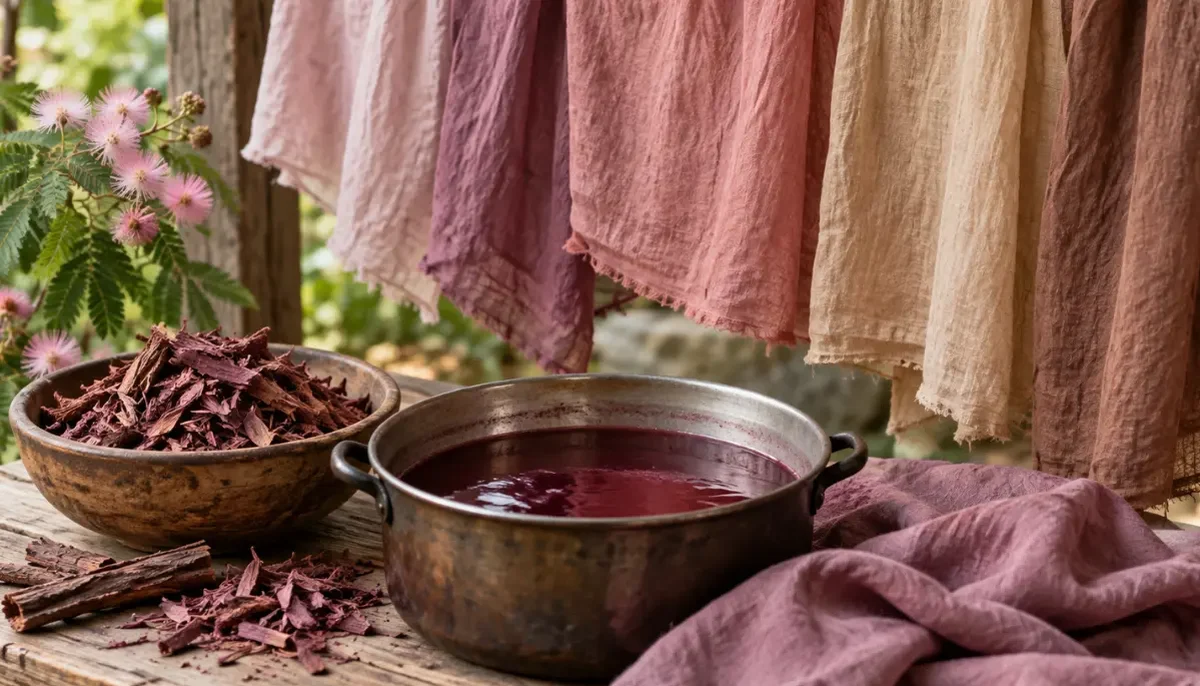
The exact result is not always the same. Dye concentration, extraction time, temperature, fiber type, and the pH of the water can all affect the final shade.
In general, a dye bath without a mordant may produce:
- Warm, earthy browns, especially at lower dye concentrations.
- Reddish browns or pinkish tones, depending on the fiber and dye bath conditions.
- Mauve and muted purple, particularly when extraction conditions favor these hues.
- Darker shades when a higher concentration of plant material is used or the dyeing process is prolonged.
The fiber also plays an important role. Wool, silk, and cotton can absorb and display dye compounds differently, so the same recipe will not necessarily produce the same color on every material.
Why Can the Same Dye Look Brown or Purple?
The difference between a more brown and a more purple result does not depend on the plant alone. pH, fiber type, dye bath concentration, and the substances used during the process can all affect how the coloring compounds in the bark appear.
For this reason, Mimosa hostilis dye samples can display a considerable range of shades rather than a single, clearly defined color.
If you want to achieve a specific result, the most practical approach is to prepare small fabric swatches first and record the conditions used. This allows you to compare results before dyeing an entire piece and makes it easier to reproduce the shade that works best.
Iron: Grays and Deep Browns
Iron is a color modifier used in natural dyeing to darken shades and change their undertones. When working with Mimosa hostilis, it can produce deeper, more muted colors ranging from dark browns to grays and near-charcoal tones, depending on the fiber and dye bath conditions.
Unlike alum, which is commonly used as a mordant, iron is often introduced to modify a color that has already been developed. Its interaction with tannins and other plant compounds can significantly alter the appearance of the fabric.
What Colors Does Iron Produce With Mimosa Hostilis?
The result depends on the recipe and textile material, but these are some of the shades you can explore:
- Dark brown: a deep, earthy shade that retains some of the warmth of the original dye.
- Slate gray: a cooler, more muted result that may develop depending on the concentration and composition of the bath.
- Charcoal: a very dark shade that can approach near-black gray, although this is not guaranteed.
- Dark mauve or muted purple: certain results may retain violet undertones while developing a deeper appearance.
Tannins in the plant material are relevant because they can react with iron to form colored complexes. However, not all fibers or dye recipes respond in the same way. These colors should therefore be treated as possible outcomes rather than exact results.
How to Use Iron Without Damaging Fabric
Although iron can help achieve darker shades, using too much can weaken textile fibers. The risk depends on factors such as concentration, exposure time, pH, and the type of material.
To reduce this risk, keep the following recommendations in mind:
- Start with a low concentration. Test the modifier on a small swatch before applying it to the entire piece.
- Avoid prolonged exposure or unnecessary repeated treatments. Longer exposure does not guarantee a better color and may increase fiber damage.
- Monitor the process. Record the concentration used, contact time, and any visible changes in the fabric’s texture or strength.
- Rinse according to the dyeing procedure. Remove residues by following the instructions appropriate for the product and fiber.
- Check the fabric after drying. If it becomes rough, brittle, or shows signs of deterioration, do not repeat the treatment.
Wool and silk require particular care because they are protein fibers, while cotton has a different structure and can also be damaged by unsuitable treatments. There is no single iron concentration that is safe for every fiber and dye recipe.
Wear gloves and follow the product’s safety instructions. If you use a commercial iron salt, consult its technical data sheet before preparing the dye bath.
Is Alum or Iron Better for Dyeing With Mimosa Hostilis?
The choice depends on the result you want. Alum is a common starting point for exploring brighter shades, while iron is useful when you want to darken or mute a color. However, neither guarantees a specific shade on its own.
If you want to compare both methods, prepare samples of the same fabric, use the same base dye bath, and change only the treatment applied to each sample. This will help you observe the differences without confusing the effects of the mordant or modifier with other variables.
How pH Changes Mimosa Hostilis Dye Colors
The pH of the dye bath is another factor that can affect the color obtained with Mimosa hostilis. pH indicates whether a solution is acidic, neutral, or alkaline, and changes in pH can alter the behavior of certain natural compounds found in the bark.
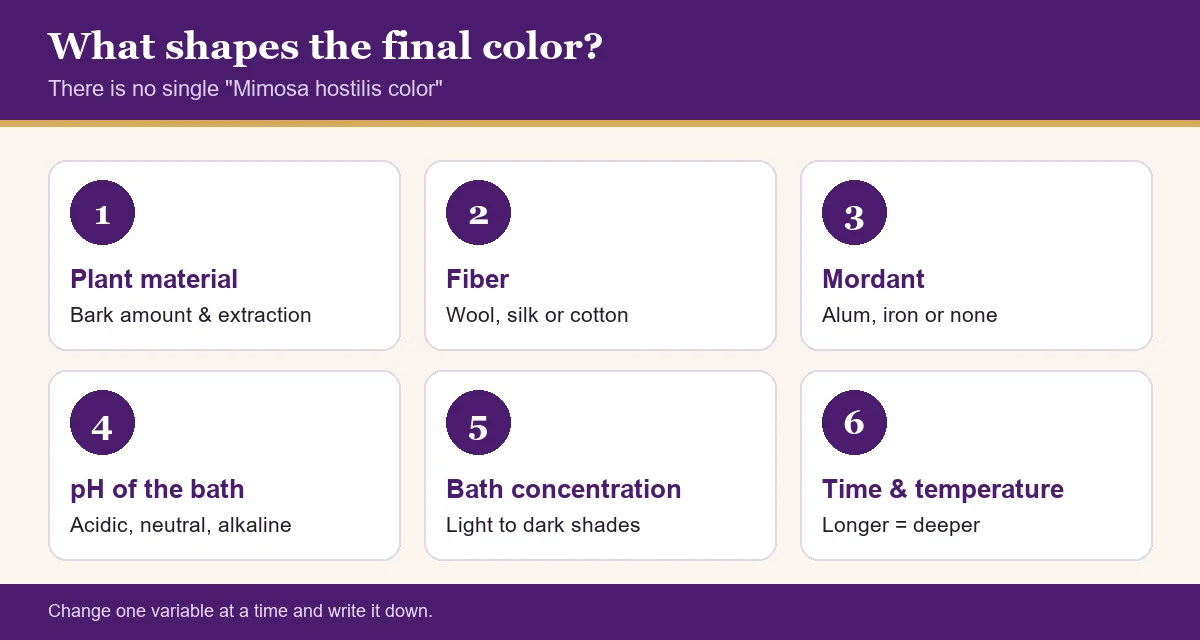
During natural dyeing, a change in pH can affect the shade, intensity, or overall appearance of the final color. However, the response depends on the composition of the extract, the type of fiber, and the mordants used. There is therefore no universal relationship between a specific pH value and a particular color.
Does a Higher pH Make Mimosa Hostilis Dye More Purple?
Not necessarily. Although changing the pH can alter the hues of some plant dyes, there is no guarantee that a more alkaline bath will always produce a more intense purple with Mimosa hostilis.
The result depends on the coloring compounds present and how they interact with the water, fiber, and any pretreatments. In addition, a color change in the liquid dye bath does not always match the final color on the fabric.
If you are looking for brown, pink, mauve, or purple shades, the most reliable approach is to test how your own recipe responds under controlled conditions.
How to Test Different pH Levels
To understand the effect of pH, prepare several small samples of the same fiber and use the same dye bath as your starting point. Divide the bath into separate portions and adjust only the pH of each one, keeping the other conditions constant.
Follow these steps:
- Prepare the fiber in the same way. Use samples of the same fabric and apply the same pretreatment.
- Divide the dye bath. Make sure the portions have comparable concentrations.
- Measure the pH. Use suitable indicator strips or a calibrated meter and record the initial value.
- Adjust the pH carefully. Use products suitable for dyeing and avoid adding concentrated acids or alkalis directly to the fabric.
- Keep the time and temperature constant. This will help you attribute any observed differences more confidently to the change in pH.
- Rinse, dry, and compare the samples. Evaluate the color once all samples are dry and have received the same final treatment.
Avoid making abrupt pH changes or assuming that every adjustment is safe for all fibers. Wool and silk, for example, can be sensitive to excessively acidic or alkaline conditions, while other materials respond differently.
How Does pH Interact With Alum and Iron?
pH does not act in isolation. It can also influence the interactions between plant compounds and the mordants or modifiers used during dyeing.
When alum is used, the result depends on the preparation and dyeing conditions, as well as the affinity between the dye and the fiber. With iron, the composition of the bath and its chemical conditions can also affect the shade and the risk of fabric deterioration.
For this reason, if you want to compare alum and iron, avoid changing the mordant, pH, and dye concentration at the same time. Testing these variables separately will help you identify which one is responsible for each change.
The best approach is to record the pH along with the other process conditions. This will help you identify which adjustments work with your recipe and reproduce them more consistently.
In the next section, we will bring together the main factors in a comparative color chart organized by fiber and mordant. This reference will help you visualize the differences and choose which combinations to test before dyeing an entire piece.
How to Keep a Dye Journal
To reproduce colors obtained with Mimosa hostilis, record the amount of bark used, the weight and type of fiber, the mordant, pH, temperature, and dyeing time. Photograph each sample once it is dry and label the results so you can compare the differences between treatments.
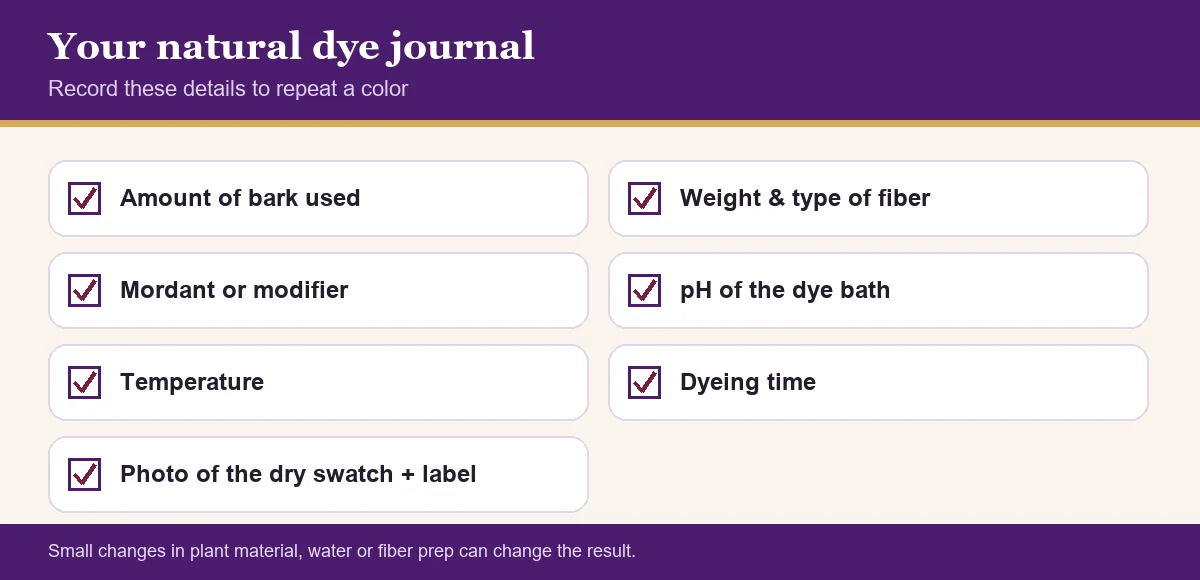
This natural dye journal will help you identify the conditions that produce the shades you want and repeat your experiments more consistently. Remember that small variations in the plant material, water, or fiber preparation can affect the final result.
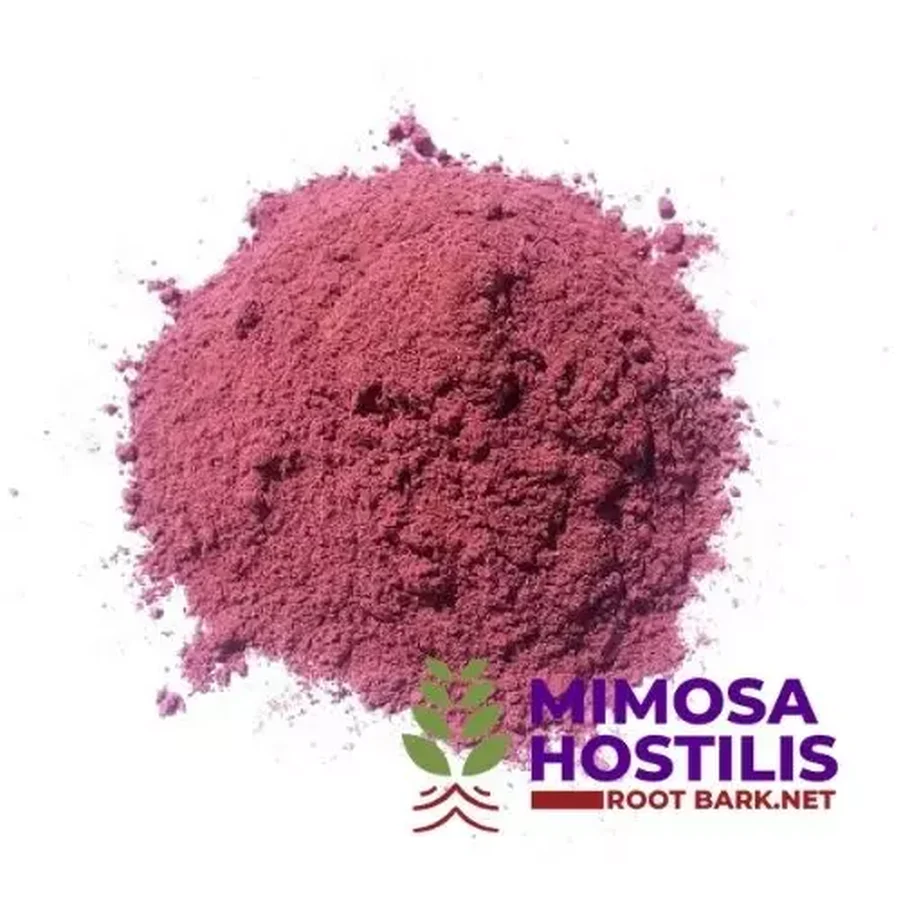
Want to experiment with natural dyes? Explore our Mimosa Hostilis Root Bark Powder and discover new possibilities for your dyeing projects.
Ready to start your own dye tests?
Choose the format that suits your project and keep a dye journal as you go. New to the process? Read our step-by-step guide to dyeing natural fabrics with Mimosa hostilis root bark.
Frequently Asked Questions About Mimosa Hostilis Dye Colors
Which Mordant Produces Purple?
No mordant guarantees a specific purple shade. Alum may help produce certain pink or mauve tones, while iron generally darkens or mutes colors. The result also depends on the fiber and dyeing conditions.
Is Iron Safe for Fabric?
Iron can be used as a color modifier, but excessive concentrations or prolonged exposure can weaken fibers. Test a small swatch first and follow the product’s safety instructions.
Can I Dye Synthetic Fibers With Mimosa Hostilis?
This article focuses on natural fibers such as wool, silk, and cotton, which are commonly used for plant dyeing. Synthetic fibers, such as polyester, may respond differently and should not be treated as equivalent materials. The result depends on their composition and the dyeing method used.
How Can I Reproduce the Same Color?
Record the amount of bark, the weight and type of fiber, the mordant, pH, temperature, and dyeing time. Use test swatches and compare the results once they are dry to identify the conditions that work best.
Does Mimosa Hostilis Dye Fade When Washed?
Colorfastness depends on the fiber, dyeing method, and treatments used. To preserve the color, follow the washing recommendations appropriate for the fabric and avoid assuming that all shades will have the same level of durability. If you need to assess colorfastness, perform a wash test on a sample.
Can I Mix Mimosa Hostilis With Other Natural Dyes?
Yes, you can experiment by mixing plant extracts to explore new shades. However, the result will depend on the composition of each dye, the proportions used, and how they interact with the fiber. Start with small quantities and record the proportions so you can reproduce the mixture.
Can I Dye a Garment Without Taking It Apart or Separating Its Components?
It is possible, but the result may be uneven if the garment contains different fibers, stitching, or synthetic materials. Some components may absorb the color differently or may not take the dye at all. For a more uniform result, check the garment’s fiber content and test an inconspicuous area before dyeing the entire piece.