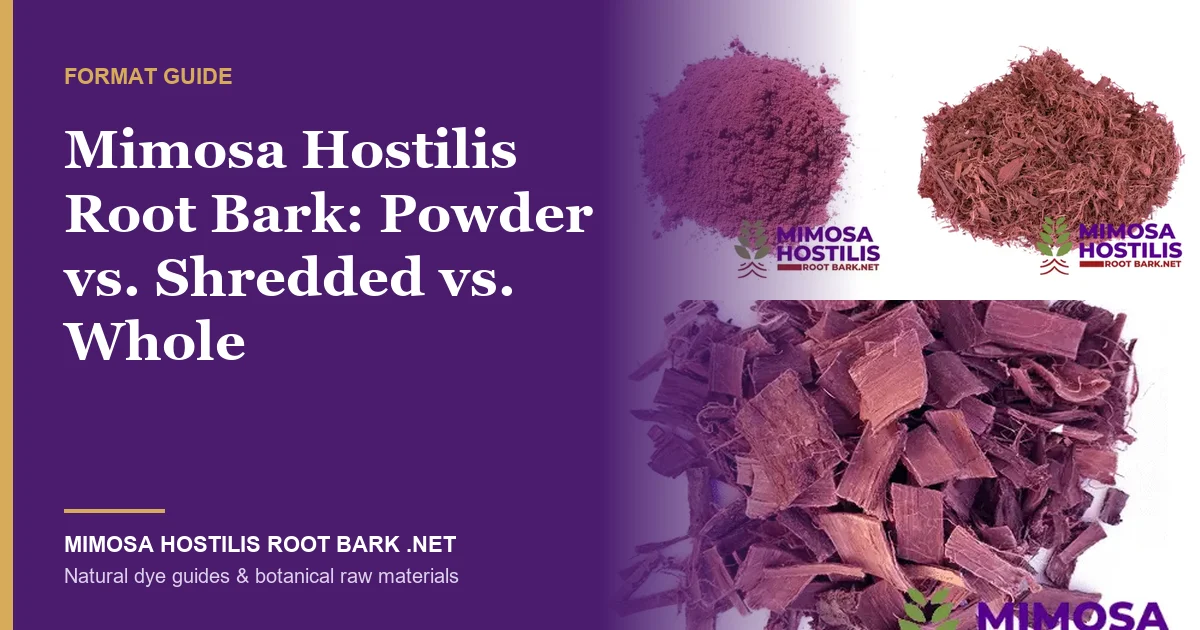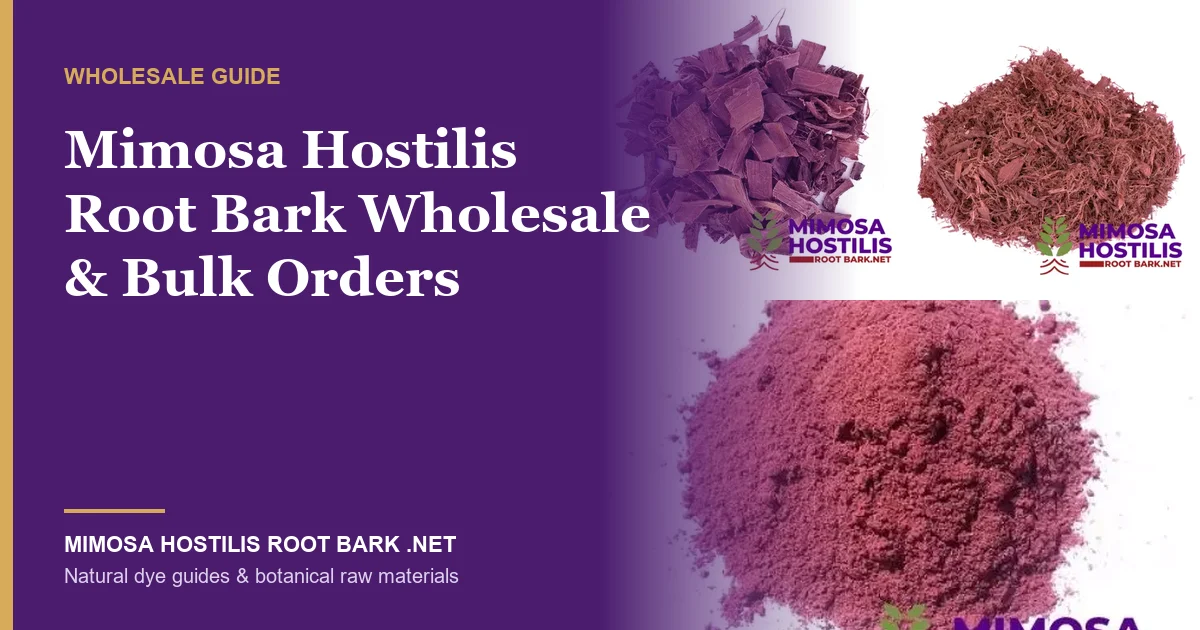
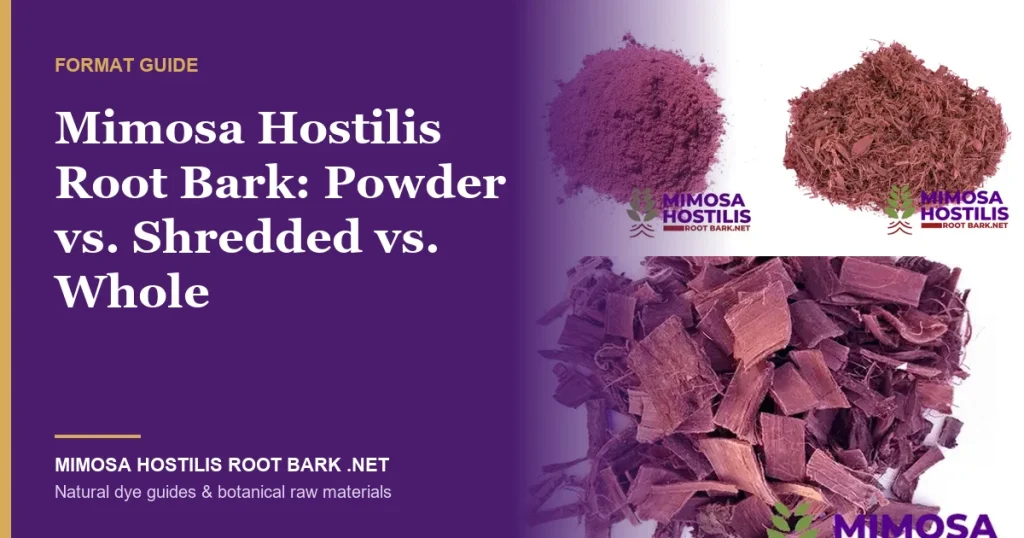
Choosing between powdered, shredded, and whole Mimosa hostilis root bark depends on how you plan to use the material. Choose powder for faster color extraction and easy incorporation into soap-making projects, shredded bark for easier straining and repeated dye baths, and whole bark if you prefer to grind it yourself or prioritize longer-term storage.
All three formats come from the same inner root bark; the main differences lie in particle size, exposed surface area, preparation requirements, and ease of handling.
Before buying, consider the type of project, the tools you have available, and how much material you expect to use. Comparing these factors can help you choose the format that best suits your workflow and budget.
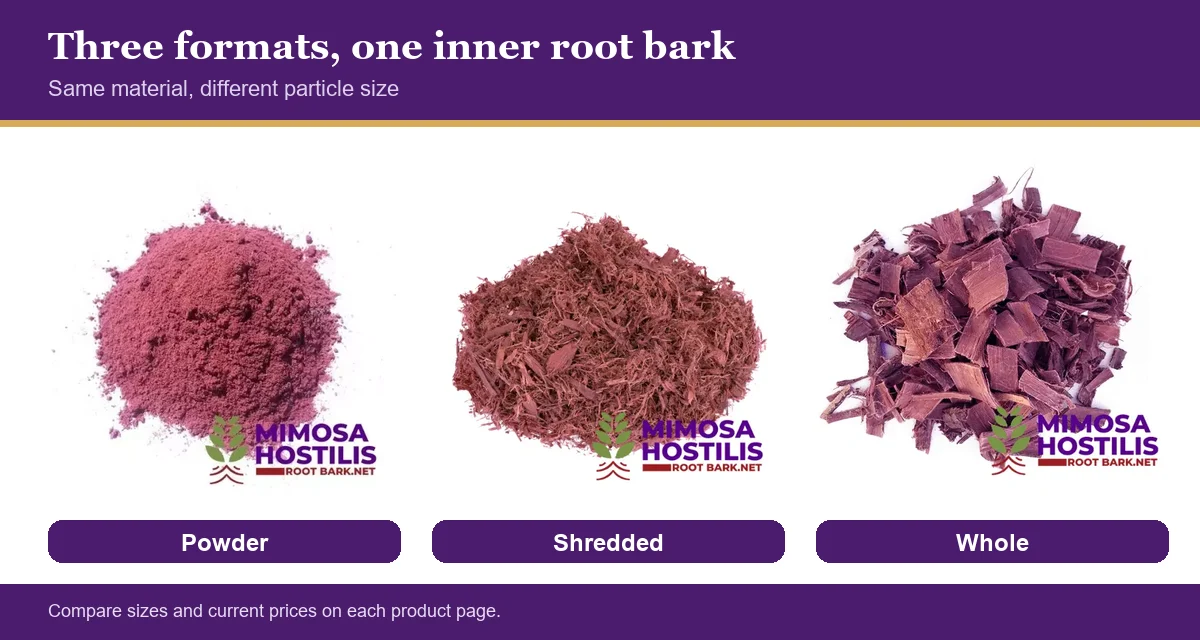
Quick Comparison: Powder vs. Shredded vs. Whole Mimosa Hostilis
| Format | Texture | Best For | Extraction Speed | Ease of Straining | Storage | Current Store Price Range |
|---|---|---|---|---|---|---|
| Powder | Fine, uniform particles | Fast color extraction and easy mixing | Generally faster | Requires fine filtration | Up to 12 months when properly sealed, according to the store’s guidelines | $40 – $325 |
| Shredded | Small bark fragments mixed with fine particles | Dye baths and projects requiring manageable pieces | Moderate; depends on particle size and method | Generally easier than fine powder, although filtration may still be needed | Keep sealed in a cool, dry place away from light | $50 – $200 |
| Whole | Larger pieces with minimal processing | People who want to grind or prepare the bark themselves | Depends on whether it is used whole or ground | Generally easier to separate when using larger pieces | Can be stored for years under suitable conditions, according to the store | $49 – $199 |
Prices reflect the ranges currently shown on the product pages. They are not prices per gram: the final cost depends on the selected weight. Check the relevant product page before placing an order.
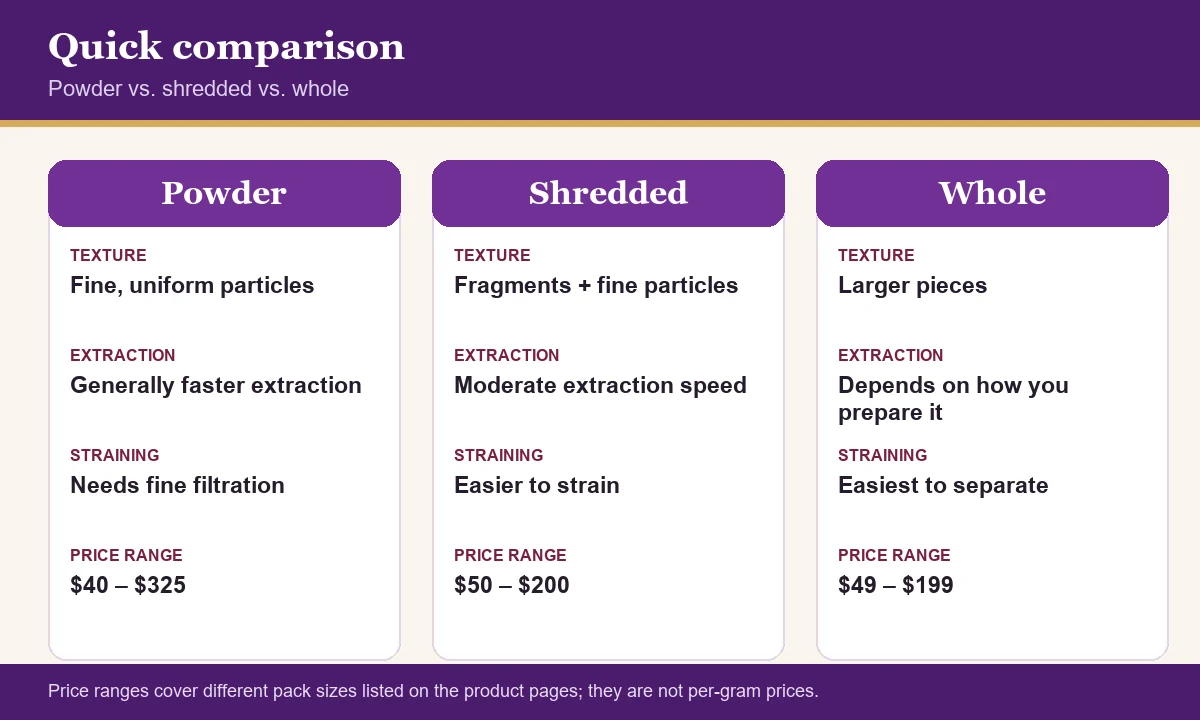
Mimosa Hostilis Powder
Powdered Mimosa hostilis root bark is the most finely processed of the three formats. Grinding increases the exposed surface area, allowing water or another suitable dye medium to come into contact with more of the material during preparation.
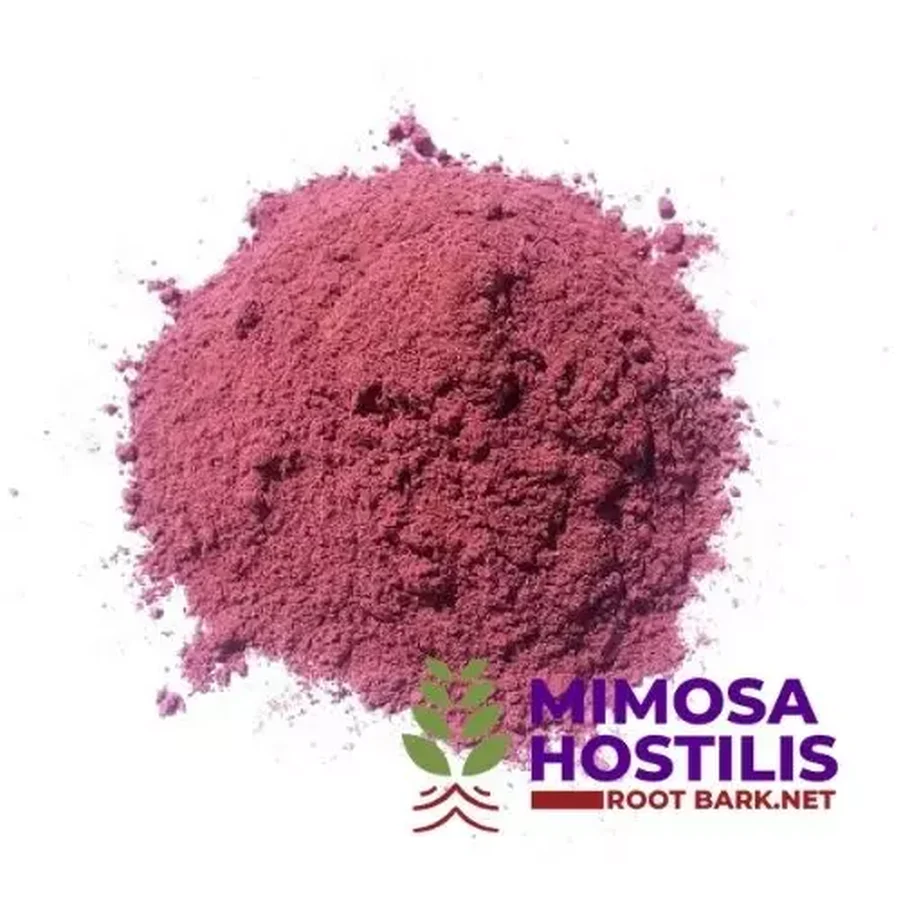
This can speed up color extraction compared with larger pieces, although results also depend on temperature, preparation time, the fabric or material being dyed, and other process variables.
Advantages of Powder
- Fast preparation: No grinding is needed before use.
- Easy mixing: Its fine texture makes it easier to distribute throughout a suitable mixture.
- Consistent handling: Fine particles can be measured and incorporated into a process without first breaking down larger pieces.
- Useful for soap making: Powder can be incorporated into compatible formulations when an even distribution of botanical material is desired.
Disadvantages of Powder
The main disadvantage is filtration. Fine particles can remain suspended in a dye bath, pass through conventional strainers, or leave residue on fabrics and work surfaces. A fine mesh or other suitable filtering material may be necessary, especially when a clean dye liquid is required.
Powder can also be more difficult to handle without creating airborne particles. Work carefully, avoid inhaling the powder, and follow appropriate handling precautions.
Check the available sizes of Mimosa Hostilis Root Bark Powder.
Shredded Mimosa Hostilis
Shredded Mimosa hostilis root bark falls between powder and whole bark in terms of particle size. It has already been broken down, so you do not need to grind large pieces, but its fragments are generally easier to separate from liquid than fine powder.
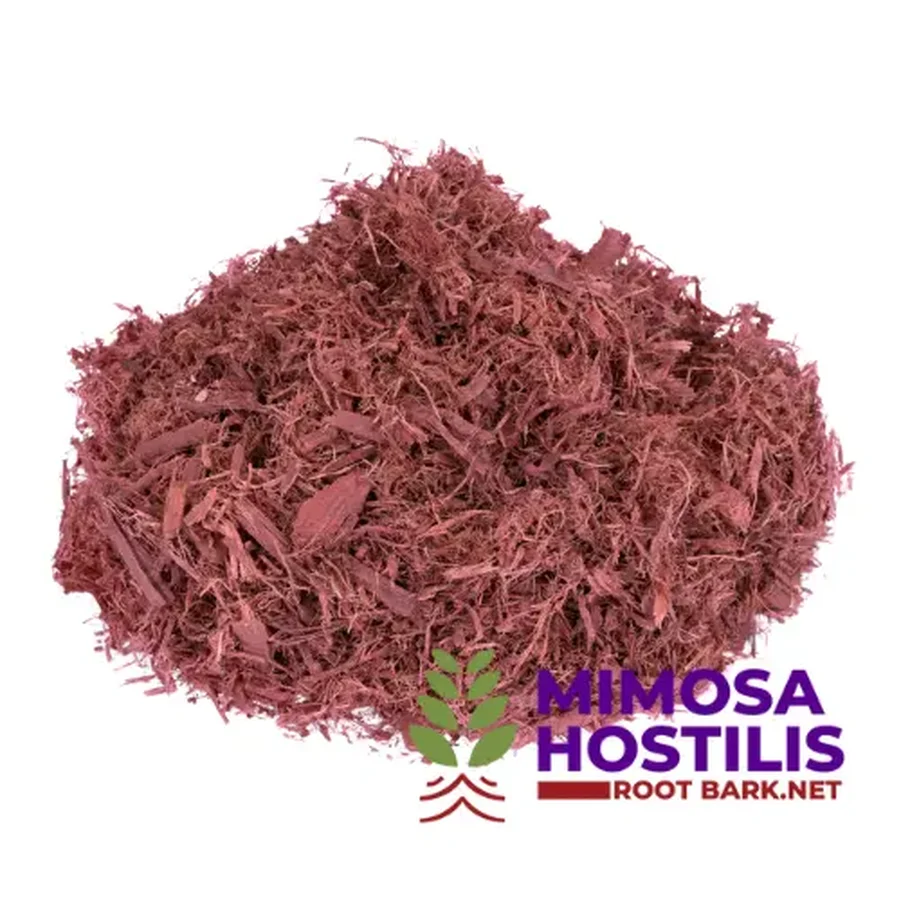
This product contains approximately 70% powder. This is an important detail because shredded bark should not be assumed to consist exclusively of large, clean fragments. The amount of fine material can also affect filtration and the final appearance of the dye bath.
Advantages of Shredded Bark
- Convenient preparation: It is ready to use without additional grinding.
- Manageable filtration: Larger fragments can be easier to remove than fine powder, although the finer material may require a mesh filter.
- A practical middle ground: It combines the convenience of a prepared material with the ability to separate solids from liquid.
- Useful for repeated dye baths: The fragments can be convenient when you want to keep the botanical material together and work with multiple batches. Actual color yield depends on how much pigment remains after each bath.
Disadvantages of Shredded Bark
Shredded bark may take longer to release color than finely ground material because it generally has a smaller exposed surface area. It may also contain enough fine particles to require filtration.
If you need a very uniform mixture or want to minimize preparation time, powder may be more practical. If you prefer to control particle size, whole bark may be a better starting point.
Compare sizes and availability on the Shredded Mimosa Hostilis Root Bark product page.
Whole Mimosa Hostilis Root Bark
Whole Mimosa hostilis root bark is the least processed format. It retains larger pieces of the bark, making it suitable for people who prefer to prepare the material themselves.
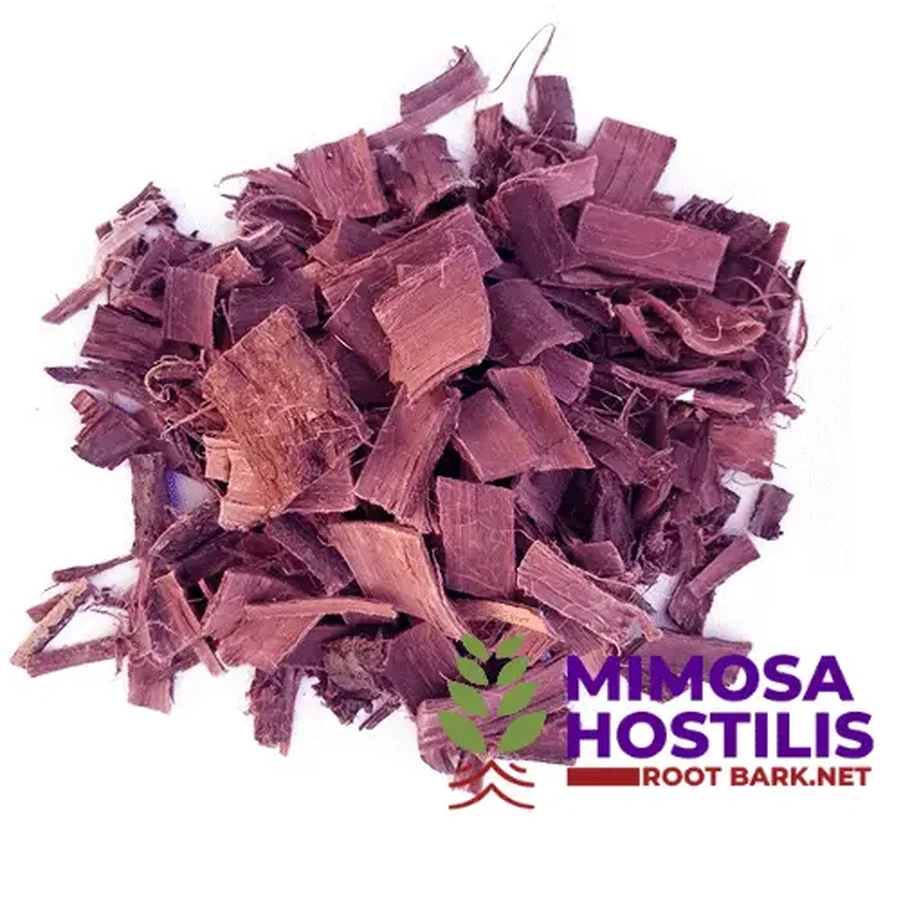
One of its main advantages is control. You can decide whether to use larger pieces or grind them into smaller fragments or powder, depending on your project’s needs. Keep in mind that grinding requires suitable equipment and additional preparation time.
Advantages of Whole Bark
- Control over particle size: Grind only the amount you need for your project.
- Less processing before purchase: The material arrives in larger pieces rather than being finely ground.
- Suitable for longer-term storage: The store states that whole bark can be stored for years when kept under suitable conditions.
- Flexible preparation: You can adjust the material’s size before a dyeing or craft project.
Disadvantages of Whole Bark
Whole bark generally requires more preparation than powder or shredded bark. Larger pieces expose less surface area to the dye medium, so extraction may take longer if the material is not broken down first.
You will also need suitable equipment if you want to produce fine, uniform powder at home. Grinding should be done carefully, using appropriate equipment and controlling airborne particles.
Check the available quantities of Whole Mimosa Hostilis Root Bark.
Which Format Is Best for Dyeing?
For natural dyeing, the best format depends on whether you prioritize extraction speed, ease of straining, or control over preparation.
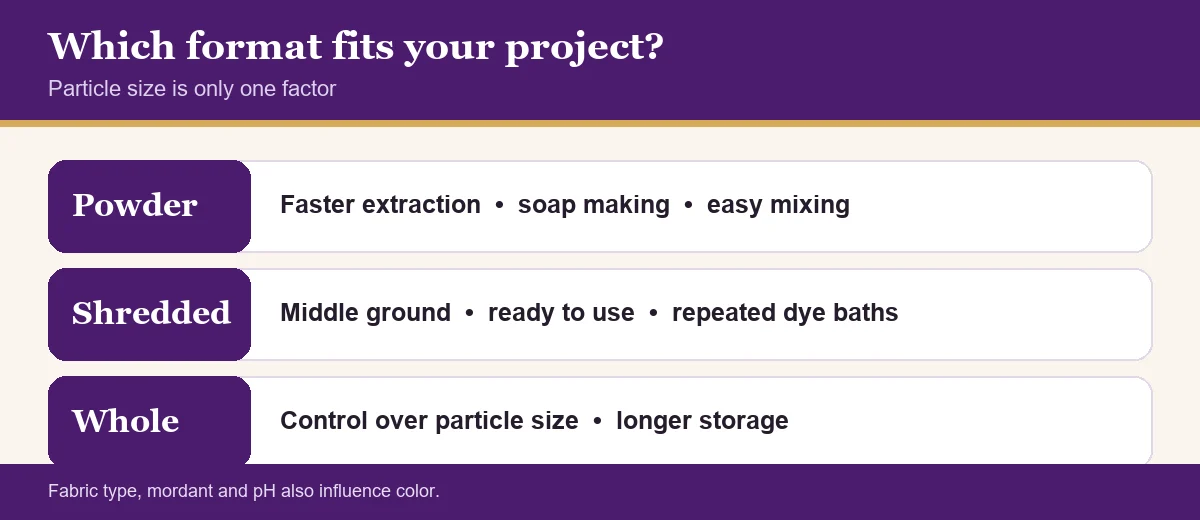
- Powder is a practical choice when faster extraction is the priority. Its fine particles provide a greater surface area for contact with the dye medium. However, you will need to filter the liquid carefully if you want to reduce residue on the finished material.
- Shredded bark is a useful middle-ground option. It is ready to use and may be easier to separate from the dye bath than fine powder. Since the product contains fine particles as well as fragments, filtration may still be necessary.
- Whole bark is suitable if you prefer to control the preparation process. You can use larger pieces or grind them to the size you need. If you use the pieces without grinding them, keep in mind that extraction may be slower.
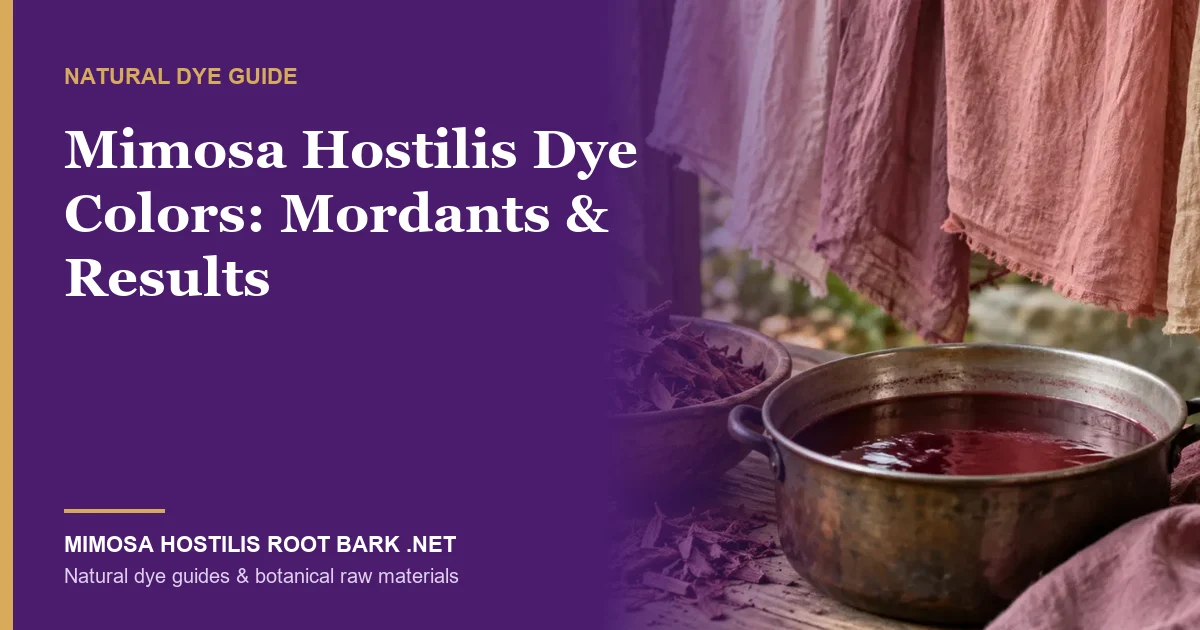
Remember that particle size is only one factor that influences color. Fabric type, mordants, water composition, temperature, and preparation time can also affect the final shade. To achieve repeatable results, record the material weight, liquid volume, fiber type, and process conditions.
For more details on how preparation and other variables affect natural dyeing results, see our related guide: Mimosa Hostilis Dyeing Guide.
Which Mimosa Hostilis Format Is Best for Soap Making?
Powder is generally the most practical starting point for soap-making projects that require finely divided botanical material. It can be easier to measure and distribute throughout a suitable mixture without first grinding larger pieces.
Shredded bark may require additional preparation if the formula calls for a fine texture. Whole bark usually involves more work because it must be processed before it can be incorporated into a mixture in powdered form.
The choice also depends on the soap-making method and the role of the botanical material in the finished product. Consider the particle size you want, how much residue you can accept, and whether your formulation requires filtration before use.
Use only materials suitable for your intended application and follow the relevant product-handling and safety recommendations. These comparisons describe the physical characteristics and convenience of each format; they do not guarantee specific cosmetic performance or skin benefits.
How to Store Each Mimosa Hostilis Format
Proper storage helps protect dried botanical material from moisture, light, and environmental contamination. The store recommends keeping Mimosa hostilis root bark in a cool, dry, dark place.
- Powder: Keep it tightly sealed and protected from moisture. The store lists a shelf life of up to 12 months when stored under suitable conditions.
- Shredded bark: Store it in a tightly closed container, away from moisture and direct light. The store does not specify a separate shelf life for this format.
- Whole bark: Keep the pieces dry and protected from light. The store states that whole bark can be stored for years under suitable conditions.
These are general storage recommendations, not guarantees that every batch will remain unchanged for a specific period. Product condition and storage conditions matter. Avoid using material that shows signs of moisture damage, mold, or unusual changes.
Frequently Asked Questions
Is powdered Mimosa hostilis better than shredded bark?
Neither format is better in every situation. Powder generally allows faster extraction and easier mixing, while shredded bark may be easier to separate from liquid. Choose according to your preparation method and filtration requirements.
Which form of Mimosa hostilis root bark lasts the longest?
The store states that whole bark can be stored for years under suitable conditions, while powder has a listed shelf life of up to 12 months when kept tightly sealed and protected from moisture. No separate shelf-life recommendation is specified for shredded bark.
Does powder produce more color than whole bark?
Not necessarily. Powder may release color more quickly because it has a greater exposed surface area, but that does not automatically mean it produces a greater total amount of color. Results depend on the material, preparation method, and extraction conditions.
How much does Mimosa hostilis root bark cost?
Current listed prices range from $40 to $325 for powder, $50 to $200 for shredded bark, and $49 to $199 for whole bark. These ranges cover different quantities listed on the product pages; they are not prices per gram. Check the selected weight and current price before buying.
Can I grind whole Mimosa hostilis root bark at home?
Yes, provided you have suitable equipment for processing dry bark and can control dust safely. Grinding allows you to choose the particle size, but it adds preparation time and may not produce a texture as uniform as commercially milled powder.
Compare Formats in Our Shop
Have you decided which format best suits your project? Compare the available sizes and current prices in our shop.
- Shop Mimosa Hostilis Root Bark Powder
- Shop Shredded Mimosa Hostilis Root Bark
- Shop Whole Mimosa Hostilis Root Bark
Explore the complete Mimosa Hostilis Root Bark category to compare the available formats and quantities.